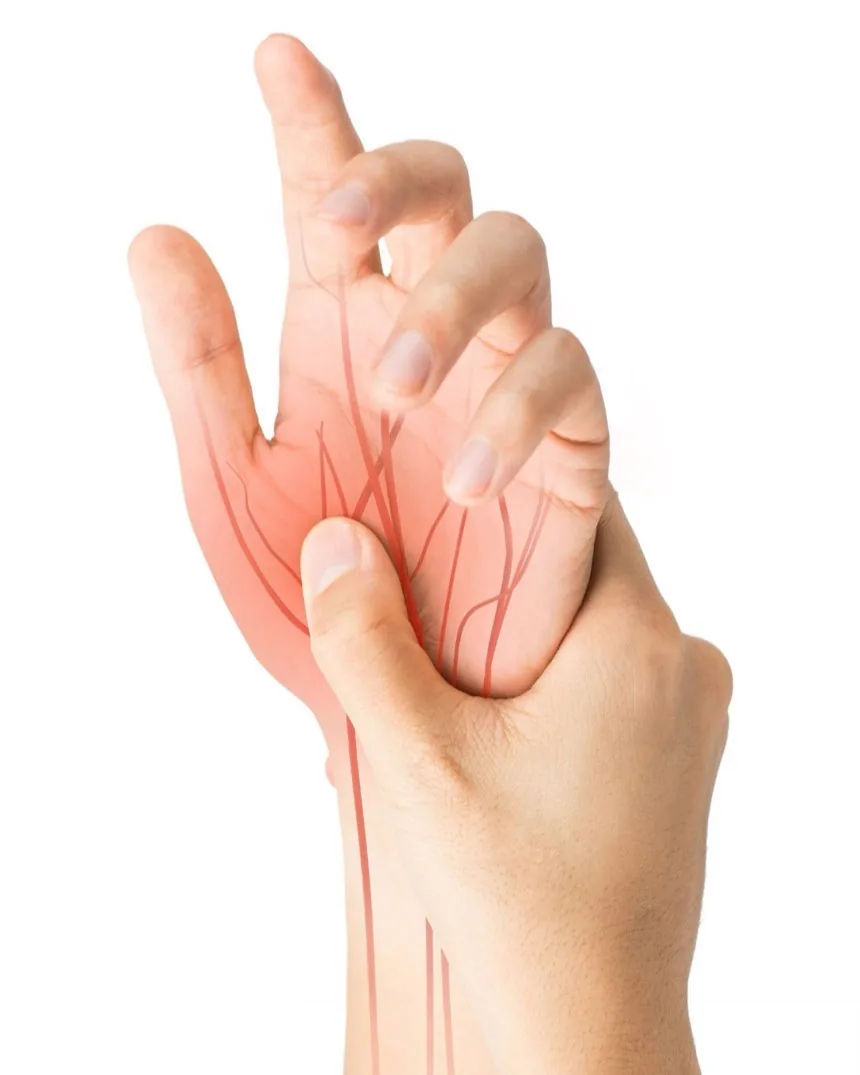
Lasting pain rarely starts where it hurts. Halcyon finds the source, then treats it without surgery — every procedure image-guided, under local anaesthetic, as day care.
Growth Factor Concentrate
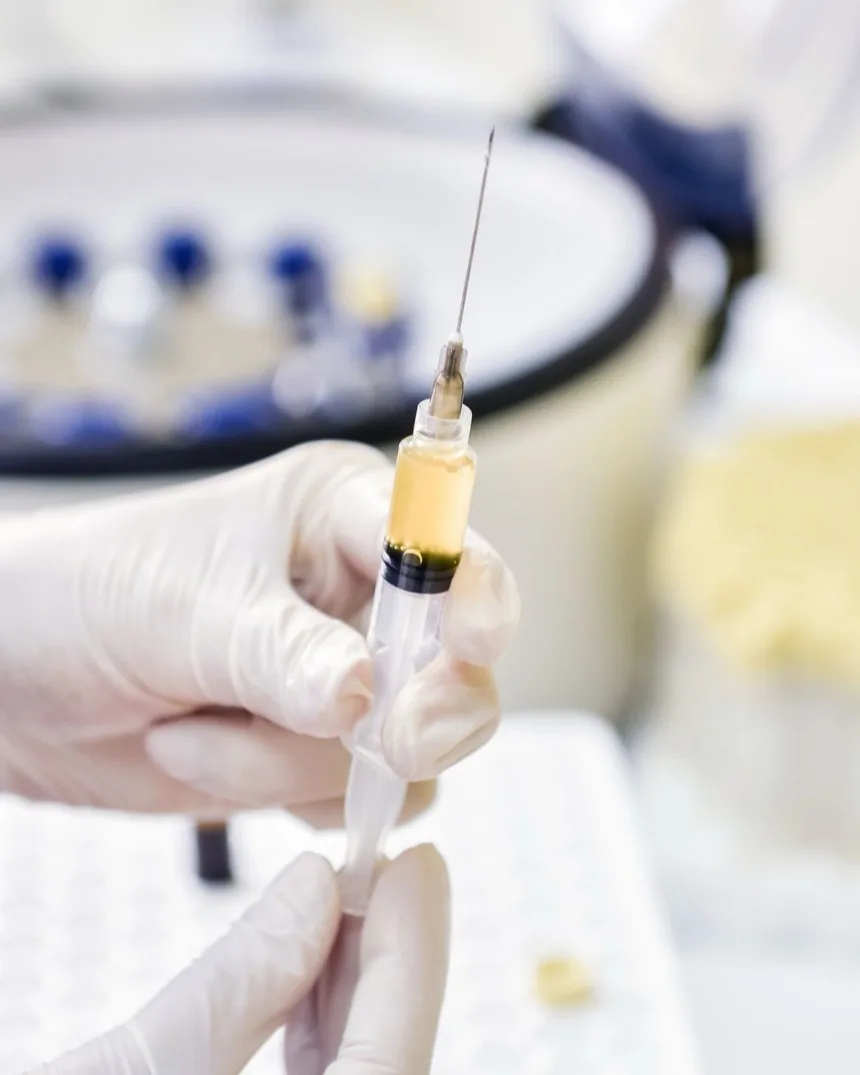
A small sample of the patient’s own blood is drawn, its growth factors concentrated, and placed under ultrasound exactly where the tissue has worn. The body does the repairing.
It works by prompting the body to repair the tissue rather than by masking the pain, which is why it is used where a structure has worn or torn rather than where a nerve is simply firing. Nothing foreign is introduced — the concentrate comes from a sample taken on the day.
Read the full guide to regenerative medicine
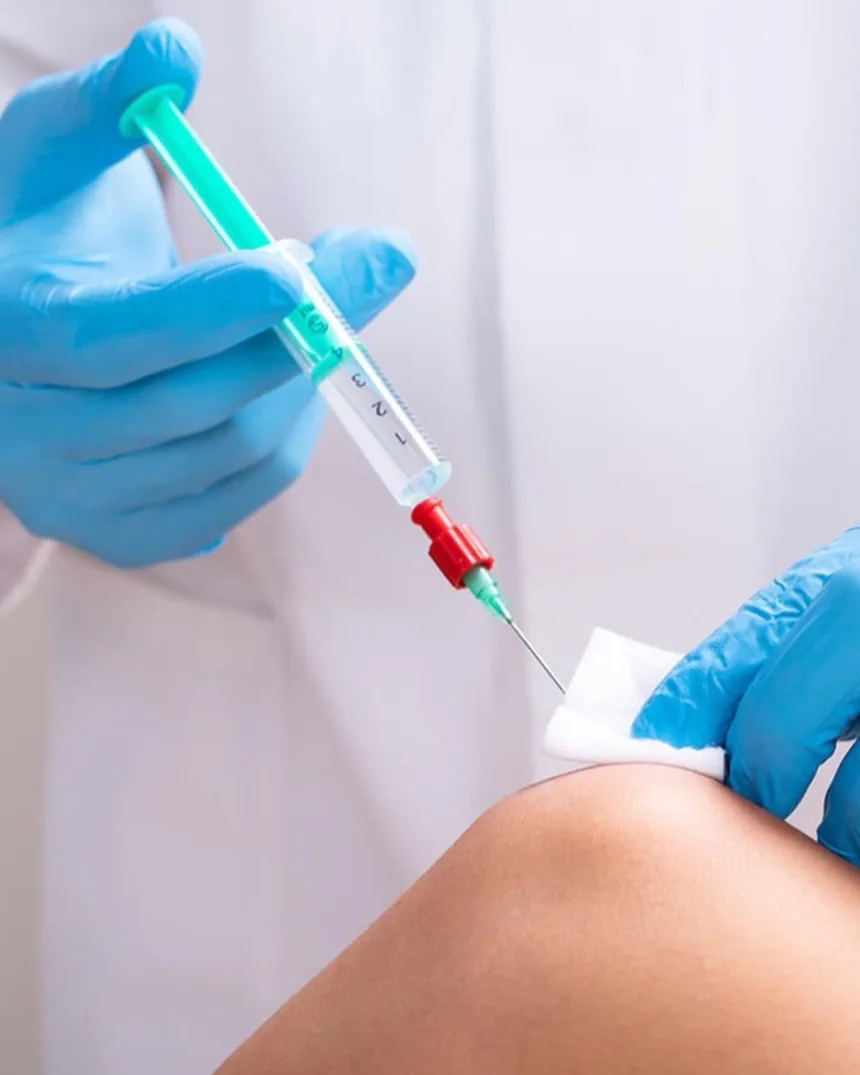
Interrupting the pain signal
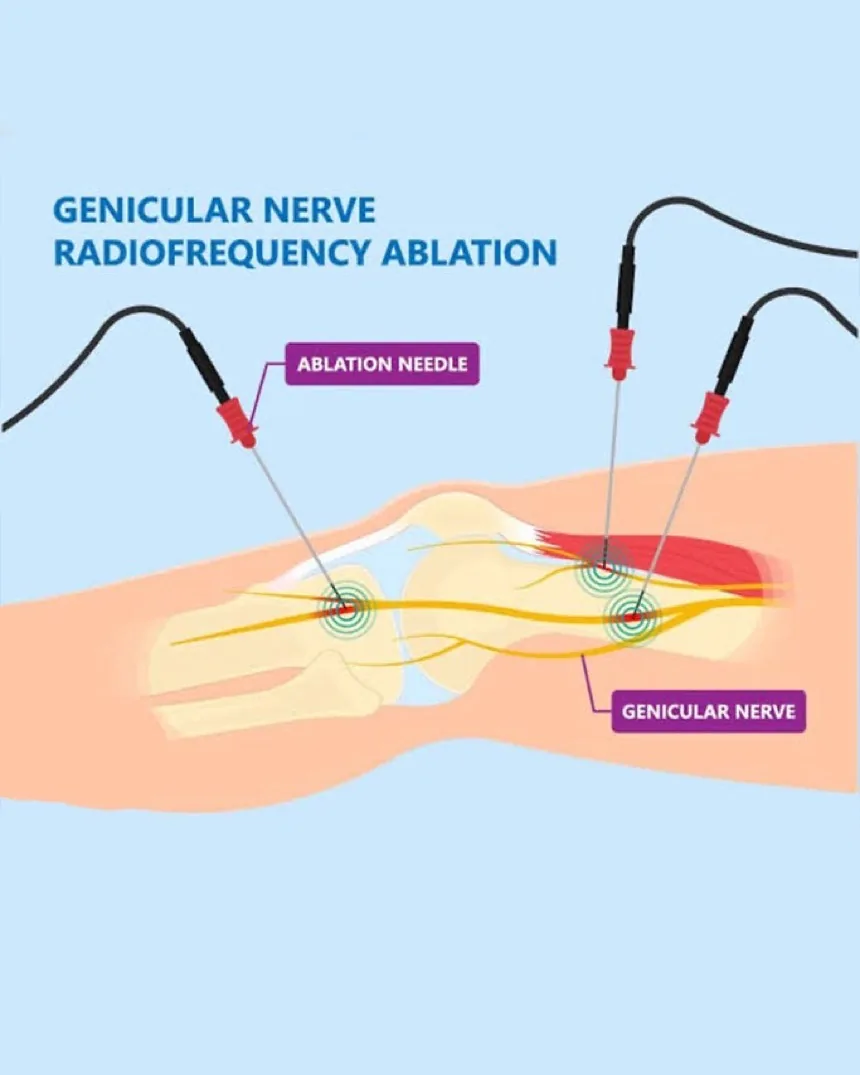
A precise current interrupts the nerve carrying the pain signal. For knee pain Halcyon uses the US FDA-cleared COOLIEF cooled RF system.
It is never the first thing done. A diagnostic block has to confirm that the nerve in question is the one carrying the pain before it is treated — in the neck and low back that means a medial branch block first, and radiofrequency only if the block confirms the source.
Read the full guide to radiofrequency ablation
Restarting the repair response
A natural irritant is injected into a slack ligament or tendon to restart the body’s own repair response. A short course of small injections, with minimal downtime — some soreness for a day or two is normal.
The aim is a ligament or tendon that holds again rather than one that has simply been quietened, so it suits the slack, overused and partly healed structures — the heel, the Achilles, a knee that gives way — more than it suits a worn joint surface.
Read the full guide to prolotherapy
Freeing and quietening a nerve
Ultrasound-guided fluid separates a trapped nerve from the tissue pressing on it. Relief often begins on the table, and the nerve itself is left intact.
Nerve blocks are the other half of this pathway, and they are used twice over: to treat a nerve that is firing, and to prove where the pain is coming from before anything else is done. A block that settles the pain is the strongest evidence available that the right structure has been found.
Read the full guide to nerve hydrodissection & nerve blocksThe four pathways above are delivered as specific, named procedures. These are the ones that come up most often, and what each is for.
A small block placed on one suspected structure. If the pain settles, that structure is the source and the treatment follows from it; if it does not, the plan changes. In the low back and neck especially, this is what stands between a diagnosis and a guess.
Placed under imaging at the level the scan and the block have identified, aimed at the irritated nerve root rather than at the whole area. This is the usual answer for sciatica and for a slipped (herniated) disc pressing on a nerve root.
The US FDA-cleared cooled RF system Halcyon uses for knee pain. A water-cooled probe treats a larger volume of tissue than standard RF, so the genicular nerves can be reached more completely.
The shoulder pair. The block quietens the nerve supplying the joint; hydrodilatation stretches a capsule that has tightened. Usually run alongside a movement programme, so the range that is freed up is kept.
Which of these you are offered is decided by the scan and the block, not by a menu — how that decision is made is set out with the conditions.
Halcyon is a non-surgical centre, and there is one case where that is not the right answer: advanced grade 4 knee arthritis with joint deformity, where a replacement is still what the joint needs.
You will be told that plainly at the consultation rather than treated anyway. How long relief lasts also varies with the condition and how worn the joint is — which is why the diagnostic scan comes first, and why the consultant gives you a realistic answer for your case rather than a number that fits everyone.
Book a consultation and the diagnostic ultrasound happens in the same appointment. Bring any recent X-ray, MRI or scan reports you already have.