Knee pain is the commonest reason people come to Halcyon in Kukatpally, Hyderabad, and it usually comes from osteoarthritis, a meniscal tear or a strained ligament. The consultant scans the knee with ultrasound in the same appointment and, depending on what it shows, treats it with COOLIEF cooled radiofrequency, a regenerative injection or prolotherapy. Every procedure is done under local anaesthetic as day care, so you go home the same day.
What is knee pain?
Knee pain is pain arising from any of the structures in and around the knee joint: the cartilage lining the bones, the meniscus, the ligaments, the tendons, or the small nerves that carry pain signals from the joint. It can follow an injury or build up slowly over years.
Where the pain is felt does not always tell you which structure is causing it, which is why the cause needs to be found before anything is treated.
Common causes of knee pain
Most long-standing knee pain has one of a handful of causes, and more than one can be present in the same knee.
- Osteoarthritis — gradual wear of the cartilage, more common with age, excess weight or an old injury
- Meniscal tears — from a twisting injury, or from wear in an older knee
- Ligament sprains and slackness — a knee that feels loose or gives way
- Tendon problems around the kneecap, often from overuse or sport
- Bursitis — inflammation of a fluid-filled sac near the joint
Symptoms of knee pain
Symptoms depend on the cause, but these are the ones people describe most often.
- Pain on walking, climbing stairs or getting up from a chair
- Stiffness, especially in the morning or after sitting
- Swelling or a feeling of warmth around the joint
- Clicking, grinding or catching
- A knee that gives way or will not fully bend or straighten
How Halcyon finds the cause
At Halcyon’s Hyderabad centre the consultant who examines your knee also scans it with diagnostic ultrasound in the same room, so the likely source of the pain is identified in one sitting. Bring any recent X-ray or MRI reports; they add to what the scan shows.
Before radiofrequency is used, a diagnostic block confirms that the genicular nerves are the ones carrying the pain. If the block settles the pain, the treatment follows from that answer rather than from a guess.
Non-surgical treatment options at Halcyon
The treatment is chosen by what the scan shows, not from a menu. The usual options are:
Halcyon is a non-surgical centre. If you have advanced grade 4 arthritis with joint deformity, a knee replacement may still be the right answer, and you will be told that plainly rather than treated anyway.
- COOLIEF cooled radiofrequency of the genicular nerves — the US FDA-cleared cooled RF system, used to interrupt the pain signal from an arthritic knee
- Regenerative injection — growth factor concentrate from your own blood, placed under ultrasound where the tissue has worn or torn
- Prolotherapy — a natural irritant injected into a slack ligament or tendon to restart its repair, suited to a knee that gives way
What to expect on the day and after
If a procedure is right for you, it is usually done in the same appointment, under local anaesthetic and ultrasound guidance. You stay awake throughout, there is no general anaesthetic and no admission, and most people are home within about two hours.
Most people walk out and go about a normal day, with aftercare instructions and a review date. After prolotherapy some soreness for a day or two is normal. How long relief lasts varies with the cause and how worn the joint is, so the consultant gives you a realistic answer for your knee.
When to see a doctor
Book an assessment if knee pain has lasted more than a few weeks, keeps returning, or is limiting walking, sleep or work. Some situations need urgent care at a hospital emergency department instead:
- A hot, red, swollen knee with fever, which can mean infection
- A fall or injury after which you cannot put weight on the leg, or the knee looks deformed
- Swelling, pain and tenderness in the calf, especially after a long journey or surgery
Treatments used for knee pain
Which one is right is decided by what the scan shows, not chosen in advance.
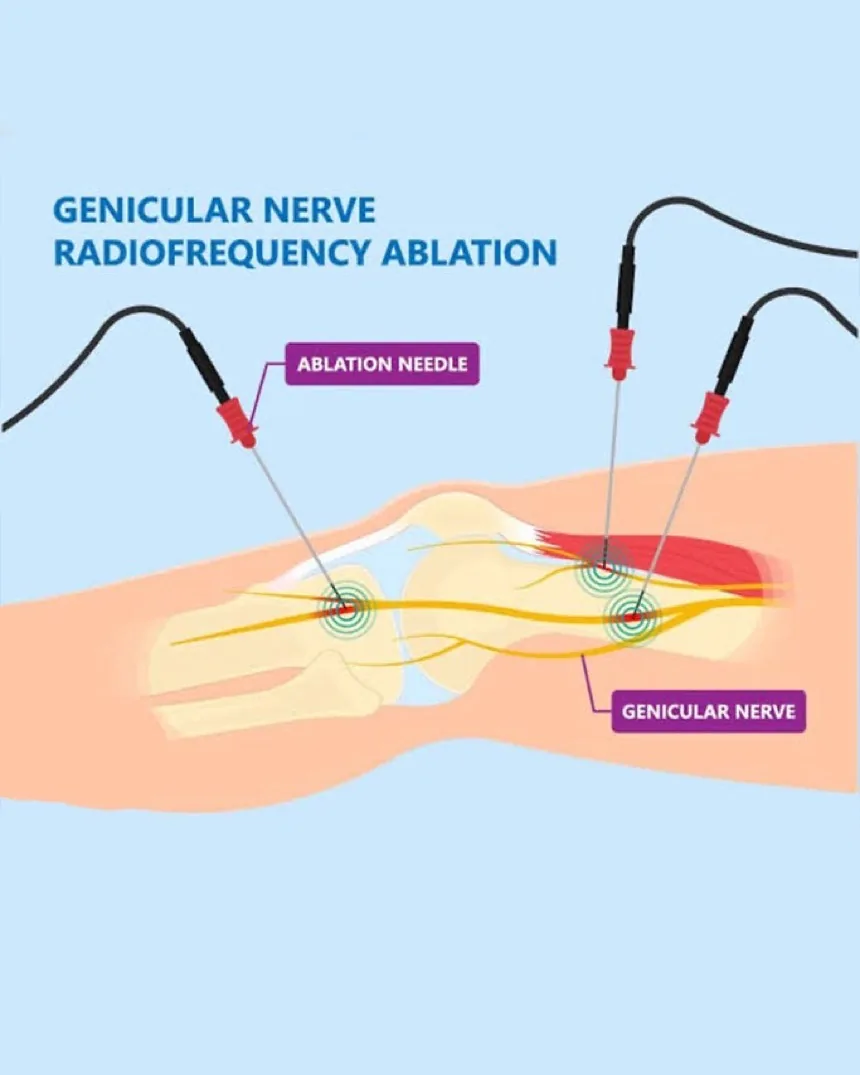 Radiofrequency AblationRadiofrequency ablation uses a precise, controlled current to interrupt the nerve that carries a pain signal.
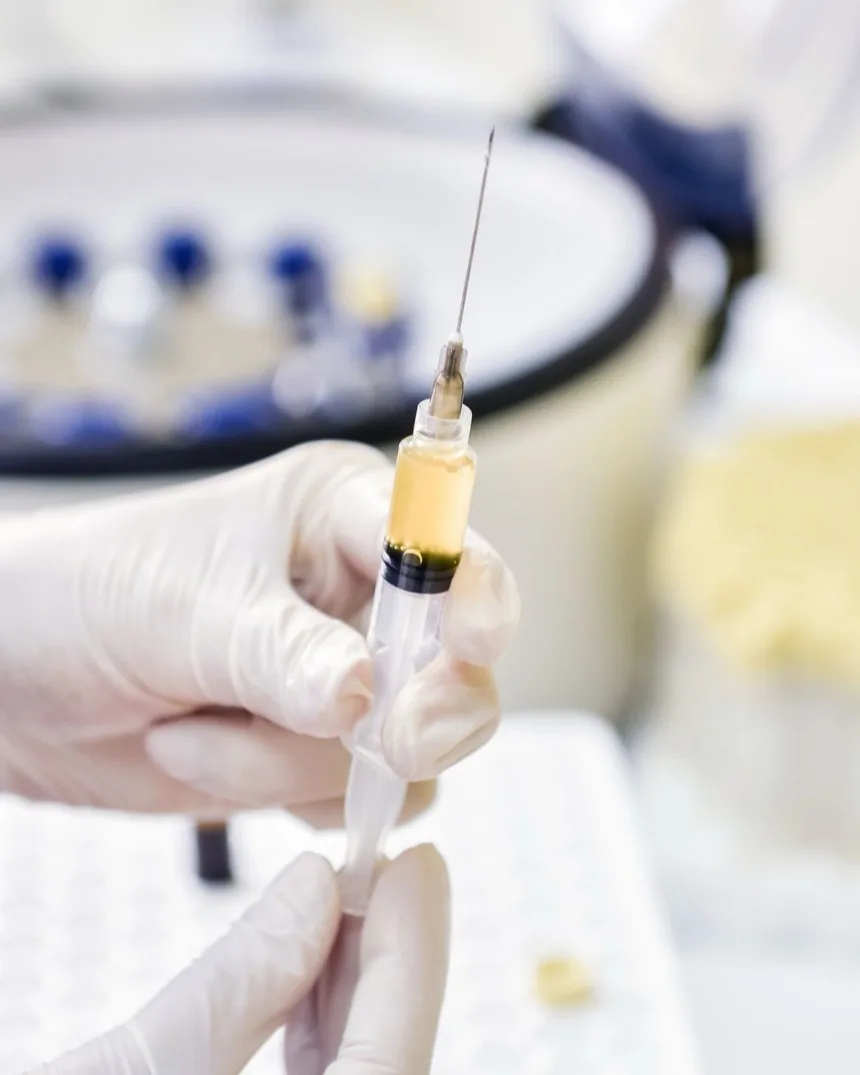 Regenerative MedicineRegenerative medicine at Halcyon means a growth factor concentrate made from a small sample of your own blood and placed under ultrasound exactly where a tendon, ligament or joint has worn or torn.
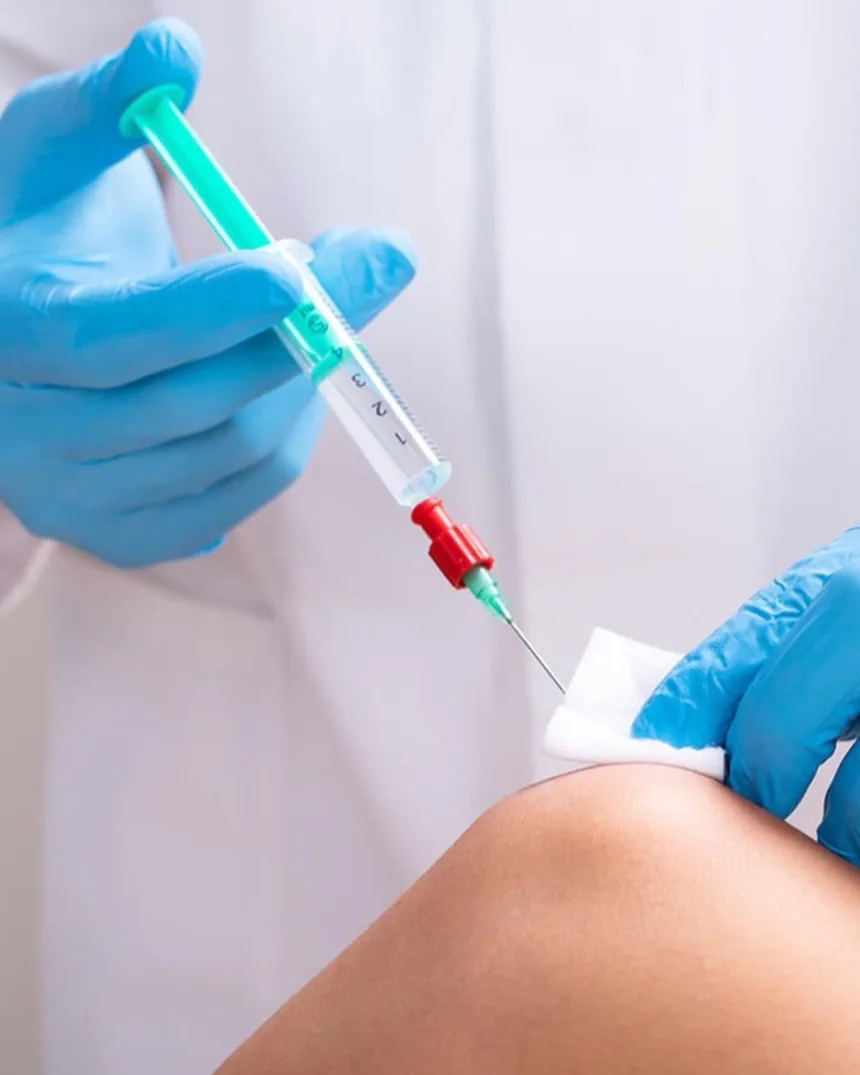 ProlotherapyProlotherapy is an injection treatment in which a natural irritant is placed into a slack or weakened ligament or tendon to restart the body’s own repair response.
Questions about knee pain
Can knee pain be treated without surgery?
In many cases, yes. Depending on what the ultrasound shows, knee pain at Halcyon is treated with cooled radiofrequency of the genicular nerves, a regenerative injection or prolotherapy, all done as day care under local anaesthetic. The exception is advanced grade 4 arthritis with joint deformity, where a replacement may still be the right answer, and you will be told that plainly.
What is COOLIEF cooled radiofrequency for the knee?
COOLIEF is the US FDA-cleared cooled radiofrequency system Halcyon uses for knee pain. A water-cooled probe interrupts the genicular nerves that carry pain signals from the joint, and treats a larger volume of tissue than standard radiofrequency, so the nerves can be reached more completely. A diagnostic block is done first to confirm those nerves are the source.
Is a regenerative injection the same as PRP?
It works on a similar principle. A small sample of your own blood is drawn on the day, its growth factors are concentrated, and the concentrate is placed under ultrasound exactly where the tissue has worn. It aims to prompt the body to repair the tissue rather than mask the pain, and nothing foreign is introduced.
Will the procedure hurt?
Procedures are done under local anaesthetic with ultrasound guidance, so the skin and deeper tissues are numbed first and you stay awake and talking throughout. There is no general anaesthetic. Some people feel pressure or brief discomfort, and some soreness afterwards is normal, particularly for a day or two after prolotherapy.
How long does the relief last?
That depends on the cause of the pain, how worn the joint is and which treatment is used, so there is no single number that fits everyone. The diagnostic scan comes first for exactly this reason, and the consultant will give you a realistic answer for your own knee at the consultation.
What should I bring to my knee pain appointment?
Bring any recent X-ray, MRI, CT or ultrasound reports, a list of the medicines you take and notes from earlier treatment for the same knee. If you take blood thinners, tell the team when you book, because they need planning before an injection. Do not stop any medicine on your own.
 Hip Pain
 Sports Injuries
 Foot & Ankle Pain