Trigeminal neuralgia causes sudden, electric-shock-like pain across one side of the face, usually set off by light touch, chewing or talking. Medication is the usual first treatment; when it no longer controls the pain, Halcyon offers image-guided radiofrequency ablation of the affected branch of the nerve, under local anaesthetic as day care. It is worth being assessed early, because trigeminal neuralgia rarely settles on its own.
What is trigeminal neuralgia?
Trigeminal neuralgia is a long-term nerve pain condition affecting the trigeminal nerve, which carries sensation from the face. It causes brief attacks of severe, shooting pain — often described as an electric shock — in the area supplied by one or more of the nerve’s three branches.
The first branch supplies the forehead and eye, the second the cheek and upper lip, and the third the jaw, lower lip and teeth. It usually affects one side of the face.
Common causes of trigeminal neuralgia
In many people the cause is a blood vessel pressing on the trigeminal nerve close to where it leaves the brainstem, which wears away the nerve’s protective coating. Sometimes no cause is found. Less often it is secondary to another condition:
- Pressure on the nerve from a nearby blood vessel
- Multiple sclerosis
- A tumour or cyst pressing on the nerve
- Injury to the nerve from facial trauma or surgery, including dental surgery
Symptoms of trigeminal neuralgia
The typical pattern is sudden stabbing or shock-like pain lasting from a fraction of a second to about two minutes, sometimes in rapid bursts. Between attacks there may be no pain at all, though some people have a background ache or burning.
Attacks are often triggered by everyday things: washing or touching the face, shaving, brushing teeth, chewing, talking, or a cold breeze. Many people first see a dentist, because the pain can feel as if it comes from a tooth.
How Halcyon finds the cause
The diagnosis is mostly made from the pattern of your pain and a careful examination of the face to work out which branch of the nerve is involved. An MRI of the brain is commonly advised to look for a blood vessel or another cause pressing on the nerve. Bring any earlier MRI reports and a list of the medicines you have tried, with doses.
Before any radiofrequency treatment, the consultant needs to be confident that the branch being treated is the one carrying the pain. The plan is built around that confirmation rather than around a guess.
Non-surgical treatment options at Halcyon
Medication, usually an anticonvulsant prescribed and adjusted by your doctor, is the standard first treatment and works well for many people. Over time some find it stops controlling the pain or causes side effects they cannot live with.
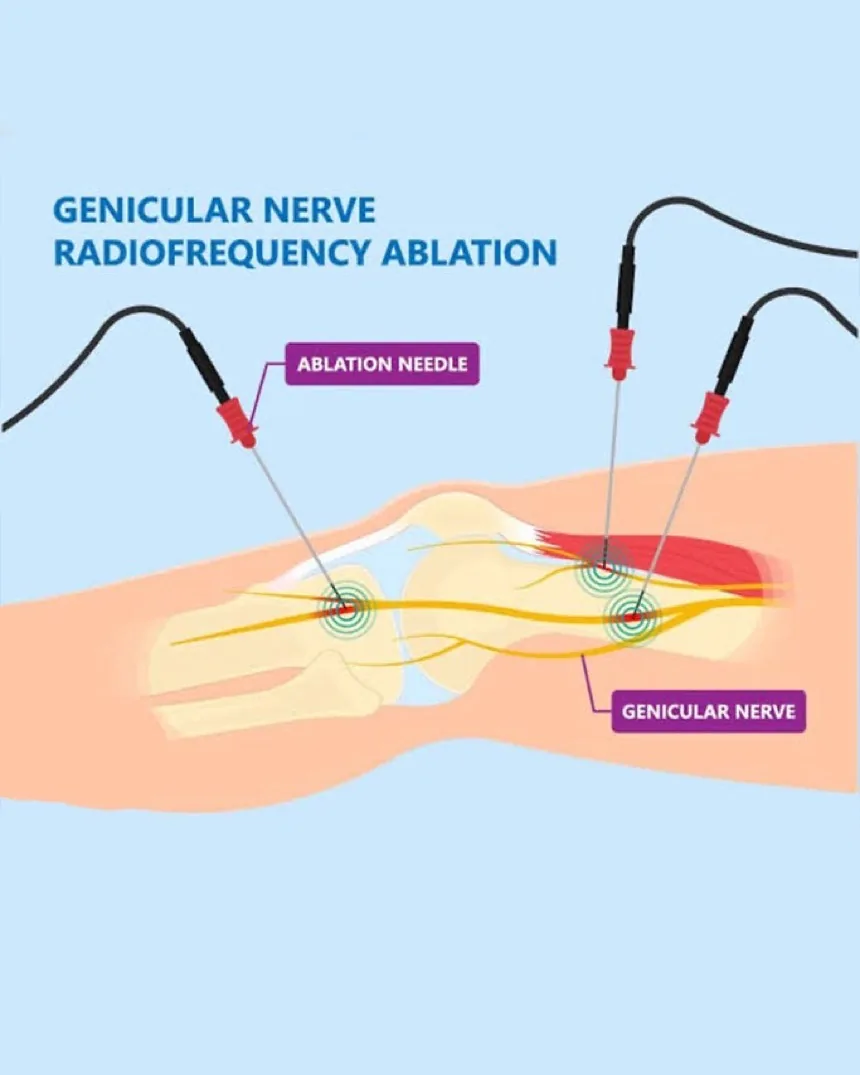
At that point Halcyon offers radiofrequency ablation of the affected branch. A precise current, delivered through a fine needle under image guidance, interrupts the nerve fibres carrying the pain signal. It aims for longer-lasting relief without open surgery. How long relief lasts varies from person to person, and the procedure can be repeated if the pain returns. Some numbness in the treated area afterwards is a known effect, and the consultant will discuss this with you beforehand.
What to expect on the day and after
The procedure is done under local anaesthetic, so you stay awake and can talk to the consultant throughout. There is no general anaesthetic and no admission; most people are home within about two hours.
You will leave with aftercare instructions and a review date. Do not stop or change your medication on your own — any reduction is planned with your doctor once the effect of treatment is clear.
When to see a doctor
See a doctor if you have repeated attacks of sharp facial pain, especially if dental treatment has not explained them. Some facial symptoms need urgent assessment instead of a clinic appointment.
- Sudden facial drooping, slurred speech, or weakness of an arm or leg — go to an emergency department now
- Facial pain with loss of vision, double vision or a severe new headache
- Numbness of the face that is spreading or persistent
- Facial pain with fever, or swelling of the face or jaw
Treatments used for trigeminal neuralgia
Which one is right is decided by what the scan shows, not chosen in advance.
Questions about trigeminal neuralgia
Can trigeminal neuralgia be treated without surgery?
Yes, for many people. Medication is the usual first step. When it no longer controls the pain, Halcyon offers radiofrequency ablation of the affected branch of the trigeminal nerve — an image-guided needle procedure under local anaesthetic, done as day care, with no open surgery and no hospital admission.
Does trigeminal neuralgia go away on its own?
It rarely settles on its own. Some people have pain-free spells lasting weeks or months, but attacks usually return and can become more frequent over time. That is why it is worth being assessed early, rather than waiting for the pain to stop by itself.
What does radiofrequency ablation do for facial pain?
A fine needle is guided to the affected branch of the trigeminal nerve and a precise current interrupts the fibres carrying the pain signal. It is offered when medication has stopped working or causes too many side effects. How long relief lasts varies, and the procedure can be repeated if needed.
Will my face feel numb afterwards?
Some numbness or altered sensation in the area supplied by the treated branch is a known effect of radiofrequency treatment. How much varies from person to person. The consultant will explain the likely effects for your case before you decide, so you can weigh them against the pain.
Can I stop my medicines after the procedure?
Not on your own. Anticonvulsants used for trigeminal neuralgia should be reduced gradually and only on medical advice. Once the effect of the procedure is clear, any change to your medication is planned with your doctor. Tell the team about every medicine you take, especially blood thinners, when you book.
How do I book an assessment in Hyderabad?
Call Halcyon on +91 77880 91092, Monday to Saturday, 9 am to 6 pm. The centre is at Kukatpally Y Junction, above the Max showroom on Moosapet Road. Bring any MRI reports and a list of the medicines you have tried. Costs are given at the consultation, before anything is booked.
 Neck Pain
 Cervical Spondylosis