A slipped disc, or herniated disc, is one where the soft centre of a spinal disc pushes out and presses on a nerve root. In most cases at Halcyon in Hyderabad it is treated with an image-guided epidural injection rather than surgery, after the scan and a diagnostic block have confirmed which level is involved. The procedure is done under local anaesthetic as day care.
What is a slipped disc?
The discs between the vertebrae act as cushions, each with a tough outer ring and a softer centre. In a slipped disc the disc does not actually slip; part of the soft centre bulges or pushes through a weak point in the ring. The medical terms are herniated or prolapsed disc.
A herniated disc often causes no symptoms. It becomes a problem when it presses on or inflames a nearby nerve root. Slipped discs are commonest in the lower back, less so in the neck.
Common causes of a slipped disc
Usually there is no single cause; several factors add up over time.
- Age-related wear, which makes the discs drier and less flexible
- Lifting, bending or twisting, especially with a heavy load
- Repeated strain from work, sport or long hours of sitting
- Excess body weight, which adds load to the lower spine
- Smoking and a family history, both linked with disc problems
Symptoms of a slipped disc
Symptoms depend on the level of the disc and which nerve root it affects.
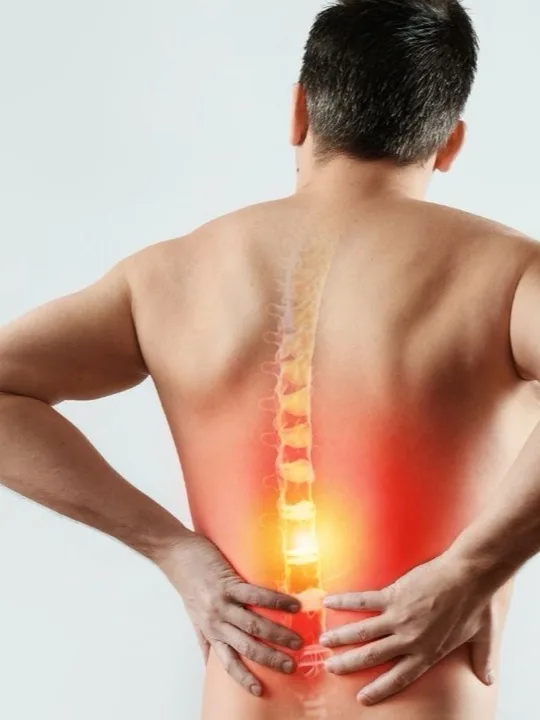
- Back pain, or neck pain if the disc is in the neck
- Pain running down the leg (sciatica) or down the arm
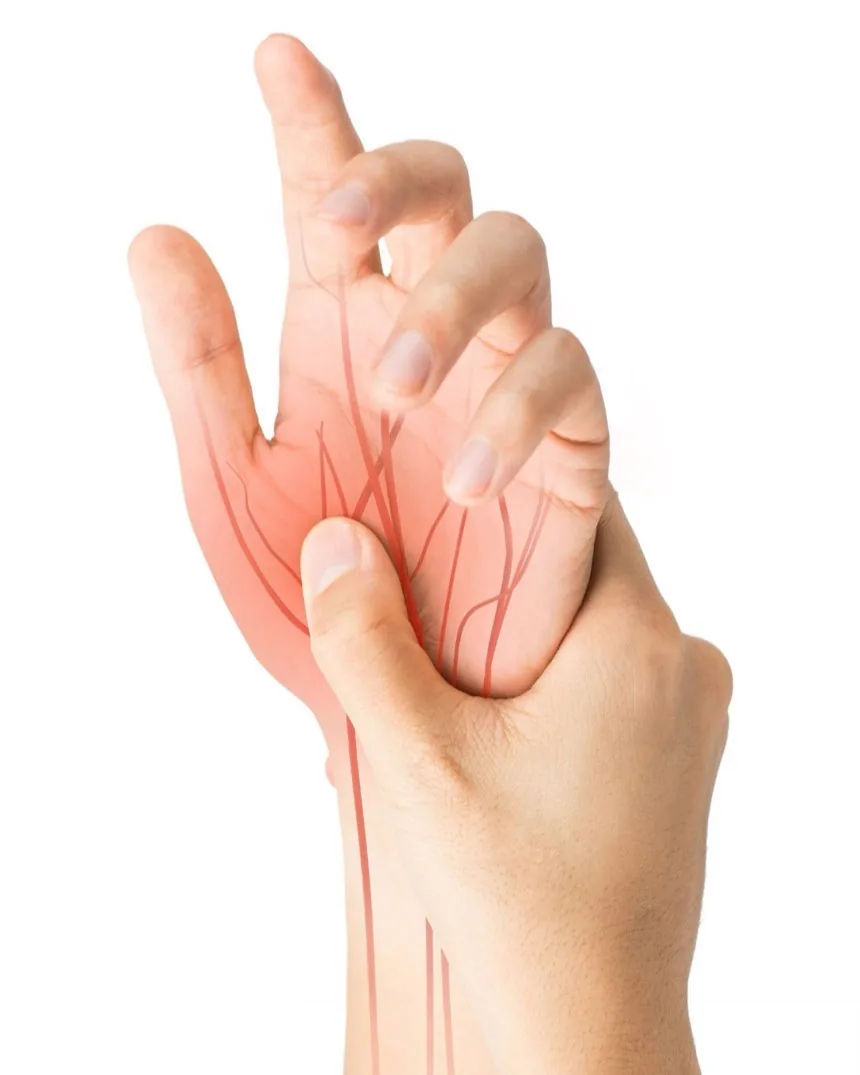
- Numbness, tingling or pins and needles in the leg, foot, arm or hand
- Weakness in the muscles supplied by the affected nerve
- Pain worse on sitting, bending, coughing or sneezing
How Halcyon finds the cause
At Halcyon’s Kukatpally centre the consultant examines you to see which nerve root your symptoms point to, and reviews your MRI or other scan reports. Disc bulges are common on scans, including in people without pain, so the scan has to match the examination.
Where there is doubt, a diagnostic block confirms which level is responsible before anything else is done. The treatment then follows from that answer rather than from a guess.
Non-surgical treatment options at Halcyon
In most cases, a herniated disc pressing on a nerve root is treated at Halcyon with an injection placed at the level involved, rather than with surgery.
Keeping as active as the pain allows and a suitable exercise programme usually remain part of the plan. Halcyon is a non-surgical centre; if your examination suggests you should see a spinal surgeon, for example because of worsening weakness, you will be told so plainly.
- Epidural injection — placed under imaging at the level the scan and block have identified
- Transforaminal injection — placed under imaging at the exit of the specific irritated nerve root
- Diagnostic block — used first where needed to confirm the level
What to expect on the day and after
The injection is image-guided and done under local anaesthetic, so you stay awake and talking throughout. There is no general anaesthetic and no hospital admission, and most people are home within about two hours.
You leave with aftercare instructions and a review date. How much and how long the pain eases varies from person to person, so the consultant gives you a realistic answer for your case.
When to see a doctor
Book an assessment if back or neck pain with leg or arm symptoms has lasted more than a few weeks or keeps returning. Go to a hospital emergency department now, rather than waiting for an appointment, if you have:
- Loss of bladder or bowel control, or numbness around the genitals or back passage
- Weakness in a leg or arm that is getting worse, or foot drop
- Symptoms in both legs, or difficulty walking
- Back pain with fever, or after a fall or accident
Treatments used for slipped disc
Which one is right is decided by what the scan shows, not chosen in advance.
Questions about slipped disc
Can a slipped disc be treated without surgery?
In most cases, yes. Many slipped discs settle with time and activity, and when pain persists, Halcyon treats it with an image-guided epidural injection at the level involved, under local anaesthetic as day care. Surgery is usually considered only for severe or worsening nerve problems, and if that applies to you, the consultant will say so.
What does an epidural injection for a slipped disc do?
An epidural injection places medicine under imaging into the space around the nerve roots at the level of the herniated disc. The aim is to settle the inflammation of the nerve root that is causing the pain, so that you can move and recover more comfortably. It does not remove the disc bulge itself.
How do you know which disc is causing my pain?
The consultant matches your symptoms and examination to the scan, because disc bulges often appear on MRI in people without pain. Where more than one level could explain your symptoms, a diagnostic block is done first to prove which one it is. The treatment is then aimed at that level.
Does a slipped disc heal on its own?
Often it improves. The bulging part of the disc can shrink over weeks to months, and many people recover with activity and time. Pain that is severe, lasts beyond a few weeks or comes with weakness should be assessed. Red-flag symptoms such as loss of bladder or bowel control need emergency care.
Will I need to stay in hospital?
No. The injection is done as day care under local anaesthetic, with no general anaesthetic and no admission. You stay awake throughout, and most people are home within about two hours. You leave with aftercare instructions and a review date, and the consultant explains what to avoid in the first days.
What should I bring to my appointment?
Bring your MRI, CT or X-ray reports, a list of the medicines you take and notes from earlier treatment for your back or neck. If you take blood thinners, tell the team when you book, because they need planning before an injection. Do not stop any medicine on your own; call +91 77880 91092 and ask.
 Sciatica
 Low Back Pain
 Neck Pain