Low back pain can come from the facet joints, a disc or the sacroiliac joint, and each needs a different treatment. At Halcyon in Kukatpally a diagnostic block is usually done first to prove which one is responsible, and the treatment follows from that answer — radiofrequency of the facet joint nerves, for example, only if a medial branch block confirms them as the source. Procedures are image-guided, under local anaesthetic, as day care.
What is low back pain?
Low back pain is pain in the lumbar region, the part of the spine between the bottom of the ribs and the top of the buttocks. Most people have it at some point, and a sudden episode often settles within a few weeks with gentle activity.
When it lasts for months or keeps coming back, it is worth finding out exactly which structure is producing it, because several different ones can cause pain in the same place.
Common causes of low back pain
Long-standing low back pain usually comes from one of three structures, sometimes with muscle strain on top.
- Facet joints — the small paired joints at the back of each spinal level, which can wear with age
- Discs — a worn or herniated disc, which can also press on a nerve root and cause leg pain
- The sacroiliac joint — where the spine meets the pelvis, often felt low on one side
- Muscle and ligament strain, from lifting, posture or a sudden movement
Symptoms of low back pain
The pattern of pain gives clues to the cause, though it rarely settles the question on its own.
- An ache across the lower back or to one side
- Stiffness after rest, sitting or first thing in the morning
- Pain on bending, twisting or standing up straight
- Pain spreading into the buttock or thigh
- Pain, tingling or numbness running below the knee, which suggests a nerve root is involved
How Halcyon finds the cause
At Halcyon in Hyderabad the consultant examines you and reviews your X-ray or MRI reports. The scan shows what is worn, but wear appears on many scans, so it does not prove what is hurting.
That is why a small diagnostic block is usually done first on the suspected structure. If the pain settles, that structure is the source and the treatment follows from it; if it does not, the plan changes. In the low back especially, this step is what separates a diagnosis from a guess.
Non-surgical treatment options at Halcyon
The treatment depends on what the diagnostic block shows. The usual options are:
Keeping active and a suitable exercise programme usually remain part of the plan alongside any procedure.
- Medial branch block — a diagnostic block of the small nerves supplying the facet joints, which also shows whether they are the source
- Facet joint radiofrequency — used only if the medial branch block confirms the facet joints, to interrupt the nerves carrying the pain signal
- Epidural or transforaminal injection — placed under imaging at the level involved when a disc is pressing on a nerve root
- For the sacroiliac joint, a block aimed at that joint, with the next step explained once it has confirmed the source
What to expect on the day and after
Procedures are image-guided and done under local anaesthetic, so you stay awake and talking throughout. There is no general anaesthetic and no hospital admission, and most people are home within about two hours.
Most people go about a normal day afterwards, with aftercare instructions and a review date. How long relief lasts varies with the cause and the individual, so the consultant gives you a realistic answer for your case rather than a single number.
When to see a doctor
Book an assessment if back pain has lasted more than a few weeks or keeps returning. Do not wait for an appointment — go to a hospital emergency department now — if you have any of the following:
- Loss of bladder or bowel control, or numbness around the genitals or back passage
- Sudden or worsening weakness in a leg
- Back pain with fever, or with unexplained weight loss
- Back pain after a fall or accident
Treatments used for low back pain
Which one is right is decided by what the scan shows, not chosen in advance.
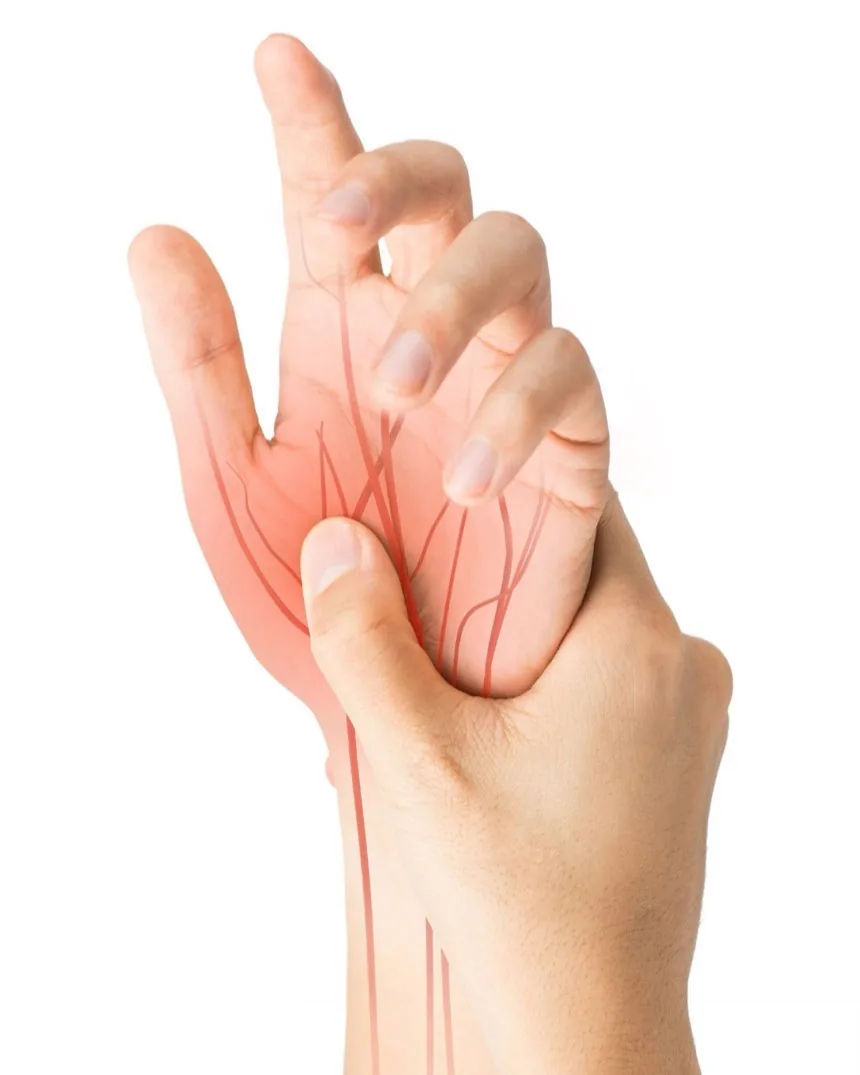 Nerve Hydrodissection & Nerve BlocksNerve hydrodissection uses fluid, placed under ultrasound, to separate a trapped nerve from the tissue pressing on it, leaving the nerve itself intact.
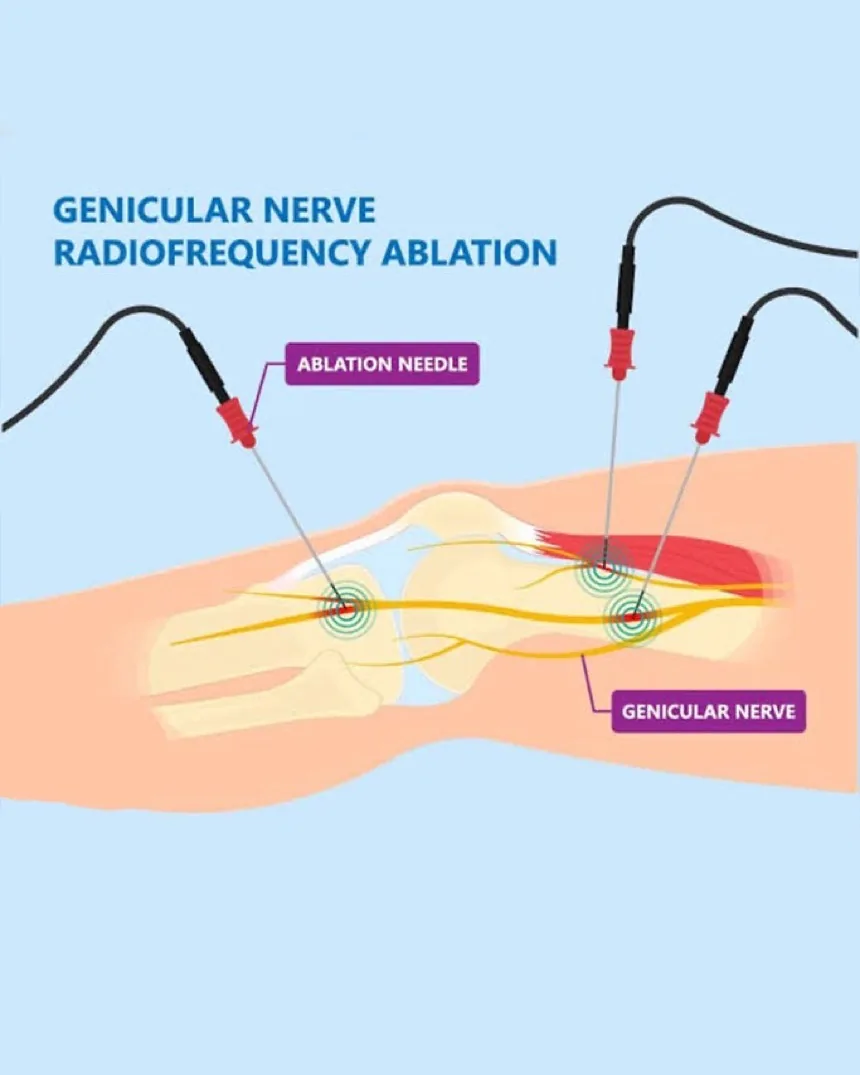 Radiofrequency AblationRadiofrequency ablation uses a precise, controlled current to interrupt the nerve that carries a pain signal.
Questions about low back pain
Can low back pain be treated without surgery?
Often, yes. Halcyon is a non-surgical centre, and long-standing low back pain is treated with image-guided procedures done as day care under local anaesthetic. A diagnostic block usually comes first to prove whether the facet joints, a disc or the sacroiliac joint is the source, and the treatment is then aimed at that structure.
What is a medial branch block?
A medial branch block is a small injection that temporarily numbs the nerves supplying one or more facet joints in the spine. If your usual pain settles afterwards, the facet joints are very likely the source. It is used as a diagnostic test before radiofrequency, and radiofrequency follows only if the block confirms the source.
What is radiofrequency ablation for back pain?
Radiofrequency ablation uses a precise current, delivered through a needle under imaging, to interrupt the small nerves that carry pain signals from the facet joints. At Halcyon it is never the first thing done. It is offered only after a medial branch block has confirmed that those nerves are carrying the pain.
Do I need an MRI before my appointment?
Not necessarily. If you already have X-ray, MRI or CT reports, bring them, as they often save a second visit. The consultant will examine you and tell you whether further imaging is needed. Scans show wear, but they do not always show what is hurting, which is why a diagnostic block is often used as well.
Will I be awake during the procedure?
Yes. Procedures are done under local anaesthetic with image guidance, so you stay awake and talking throughout. There is no general anaesthetic and no hospital admission. Most people walk out and are home within about two hours, with aftercare instructions and a review date.
When is back pain an emergency?
Loss of bladder or bowel control, numbness around the genitals or back passage, sudden weakness in a leg, or back pain with fever all need to be seen urgently. Go to a hospital emergency department rather than booking a clinic slot. If you are not sure, call Halcyon on +91 77880 91092 and ask.
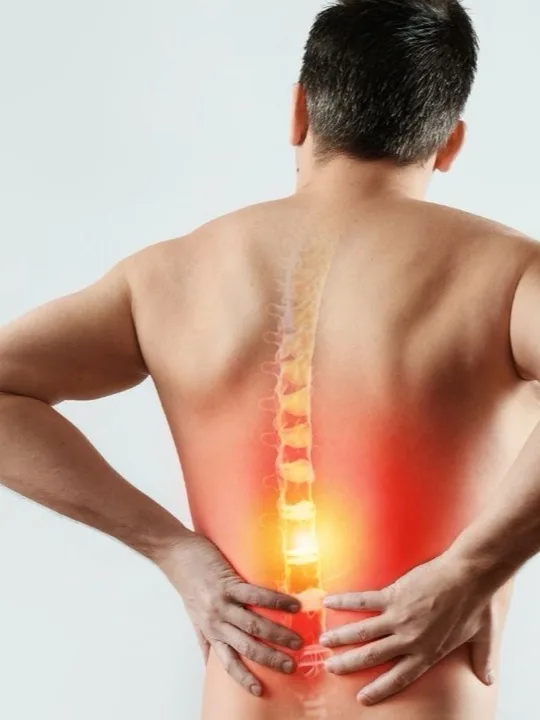 Sciatica
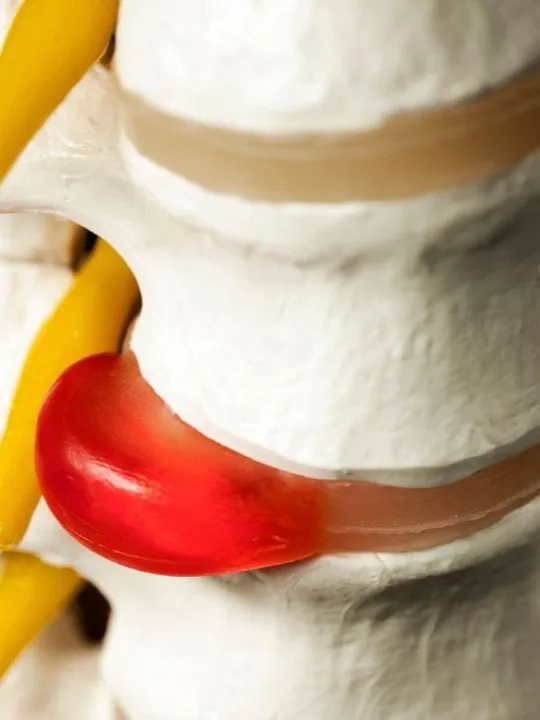 Slipped Disc
 Hip Pain